

Episode five: Will socialising ever be the same?
Published Monday, December 14, 2020
Keen to head to the beach with your friends? Wanting to train for the summer futsal season? Missing your mates? It is definitely a good idea to catch up with friends and reconnect with sports clubs and other groups you belong to. Of course, socialising during COVID-19 is complex. Catching up with friends can be energising but can also make you feel unsure. You may also find remembering all the new rules about when to carry a mask and whether you can give someone a hug hard to keep on top of. Here are some things to keep in mind when you head out.
For those of us just coming out of lockdown or concerned about getting or spreading COVID-19, we might be feeling more anxious than usual about being around other people. It has been a big year and now we are adjusting again. A mixture of feelings/moods such as excitement, nervousness, hope and discomfort are quite normal at this time.
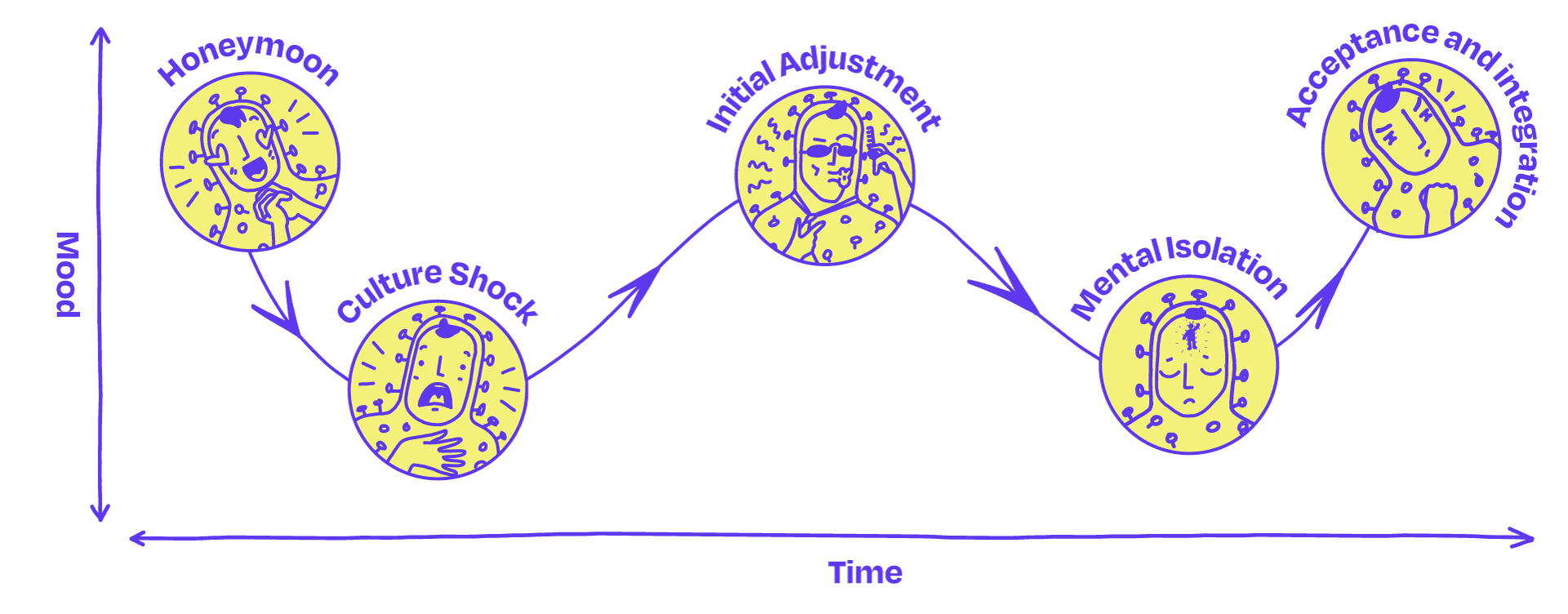
Everyone reacts differently to change but as the above diagram shows, it is not unusual to experience a range of feelings that fluctuate over time – and while nothing may be different between you and your friends, the world around us has changed. Just remember that everybody’s in the same boat and that you might be on a different part of this emotional curve to other people. Communicating with your friends and family about what you’re comfortable with is a great way to make sure they’re aware of your concerns and boundaries.
If you need some help adjusting and aren’t sure what to do, have a look at “How can I take care of myself?”
When you do catch up with friends, there are some interesting characteristics of how COVID-19 spreads that are worth being aware of.
COVID-19 is most likely to spread amongst those in the same household. You might have noticed there has been an emphasis on households mixing in the news. Your household may just be yourself, or also include your parents, friends or extended family. Whatever your household looks like, being in the same household means that you are spending time together indoors sharing food, utensils, air ...lots of things.
And so if somebody is infected, they’re most likely to infect the people they live with. The more households that meet up, the more likely that COVID-19 will spread to other households. For this reason, limiting the number of friends you meet up with from different households reduces the chance of spreading COVID-19.
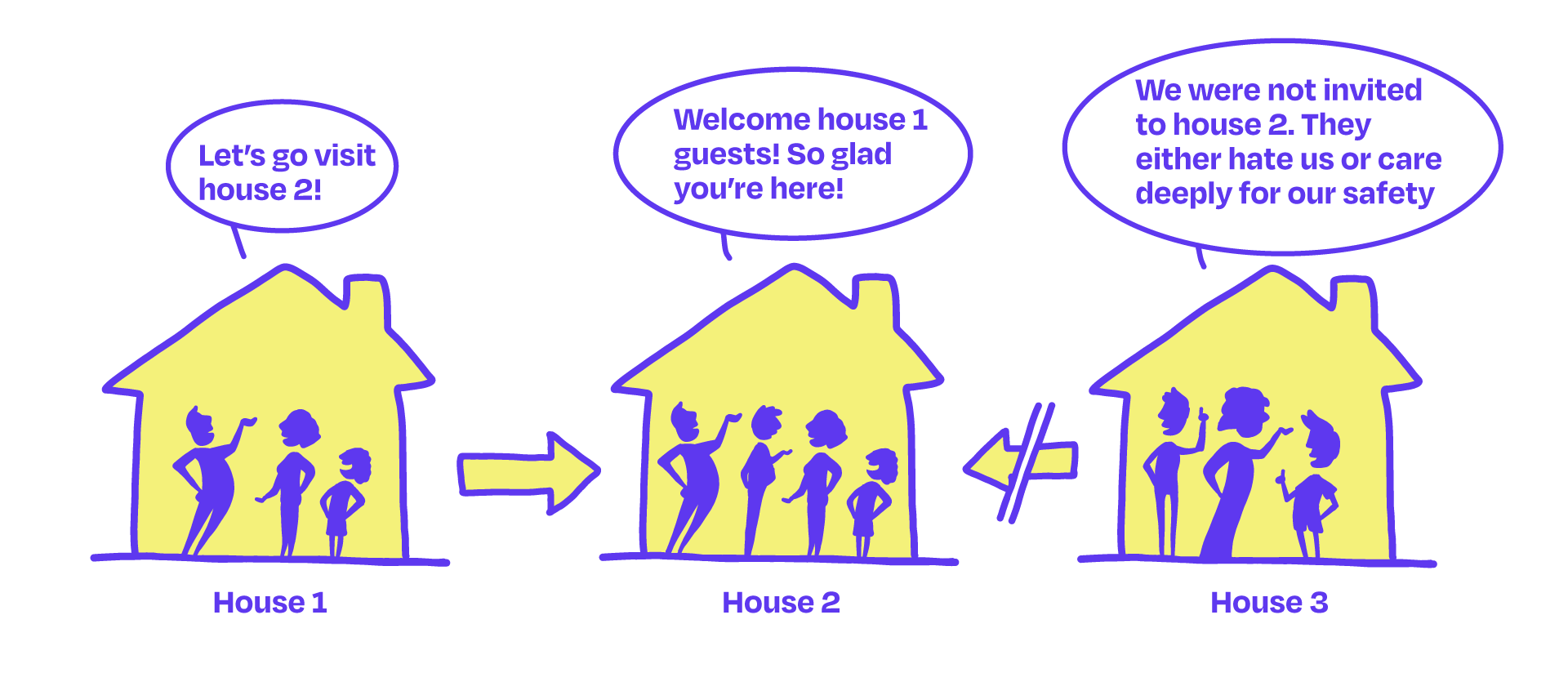
In addition to which friends you’re meeting up with, where you’re seeing them matters.
COVID-19 is more likely to spread in indoor areas without air flow, particularly if there’s lots of shouting or singing going on (remember the “How do I protect myself” article?). Not that you can’t socialise or have fun with friends, but maybe suggest another activity if somebody suggests indoor karaoke!

Outside, things are a little different. Because outdoor spaces are well-ventilated due to natural air flow, droplets are less likely to linger in the air and there are fewer surfaces to touch. Less likely doesn’t mean impossible though, so it’s still wise to keep your physical distance, and wear a mask when you’re unable to do that, or if government directions require it. Guidelines about how many people you can mix with in different places vary based on where you live, so be sure to check what rules apply to you before you head out.
All of that said, humans are naturally social! How nice is it to see friends, relax and have a laugh. By socialising in a COVID-aware manner, we can make sure that transmission rates remain as low as possible, while still enjoying the company of friends.
Here’s some more info:
Fear of going out? Here's how to manage anxiety when returning to 'normal'
The path back from social isolation
Physical distancing information

Approved by Certified COVID Expert Professor Jodie McVernon
Jodie McVernon is a public health doctor and epidemiologist. Her work focuses on understanding how infections are spread, to help find better ways of preventing and treating the diseases they cause.

Approved by Disaster Resilience Expert Professor Lisa Gibbs
Lisa Gibbs is a public health academic. Her work focuses on understanding experiences of disaster recovery and how to promote individual and community resilience.
 Share
Share
 Tweet
Tweet
 Pin
Pin
 Email
Email
 Share
Share
 Share
Share
