

Episode two: How does COVID-19 spread?
Published Thursday, November 26, 2020
How do you actually catch the virus that causes COVID-19? Do you have to swallow it, touch it, or breathe it in? Does the virus spread on surfaces or in the air? Well, it’s both.
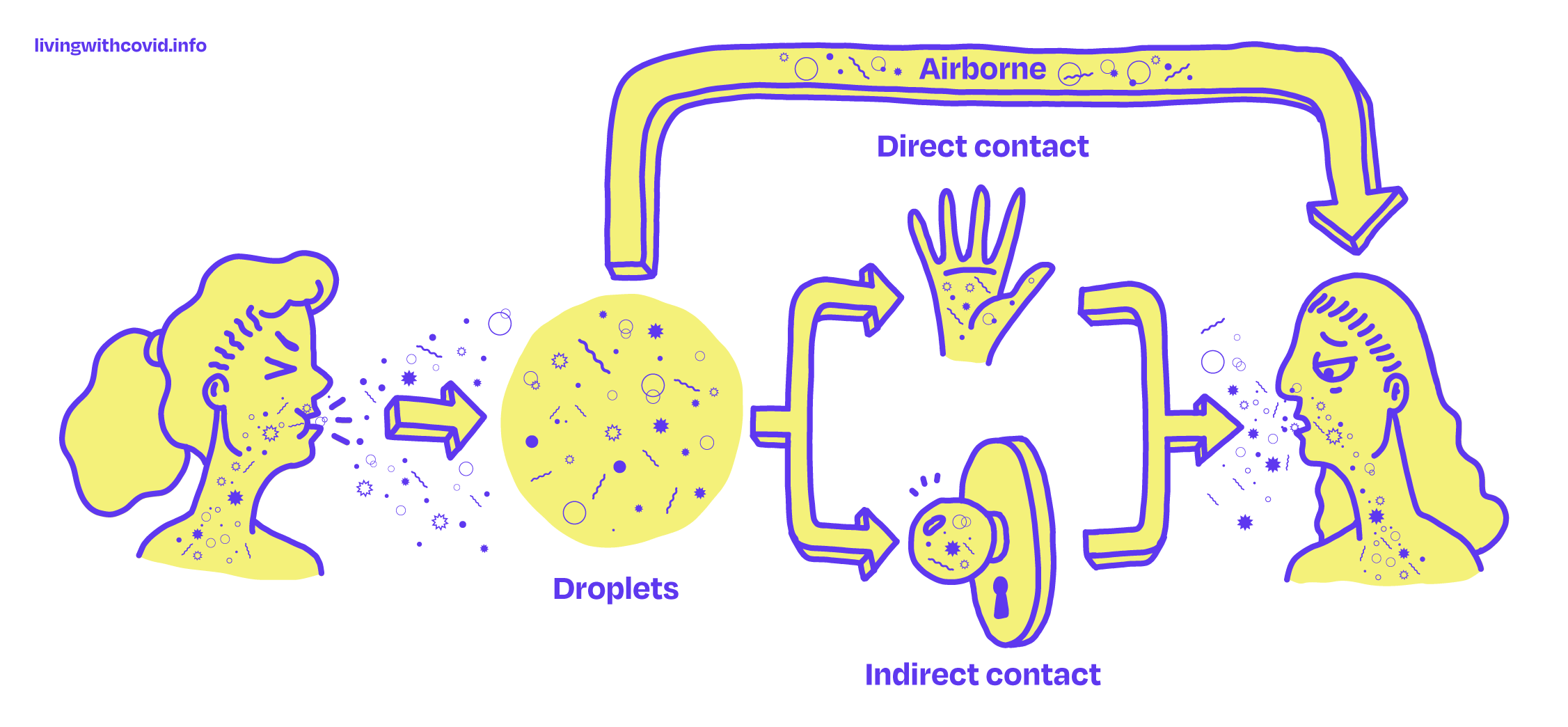
Our current understanding is that the virus that causes COVID-19 is transmitted between people through droplets. These infectious droplets start their journey in an infected person’s respiratory system, or airways. The airways contain the organs and tissues that allow you to breathe.
You can become infected by the virus by breathing in these infectious droplets. In your airways the virus then makes millions upon millions of copies of itself. At this stage, any air which comes out of your mouth or nose may contain infectious droplets contaminated with virus. If you were to cough, sneeze, talk, or even sing, the infectious droplets are then propelled into the air. These droplets can then be breathed in by someone standing near you, then they become infected and so-on.
Here’s a video which shows droplets being expelled when somebody sneezes.
You can also become infected by touching a surface that an infectious droplet has settled on. These droplets may not be visible, but if you happen to touch them and then touch your eyes, nose, or mouth, the virus can also enter your body that way. This transfer can be prevented by washing your hands before touching your face, and by regular cleaning of hi-touch shared surfaces like doorhandles and phones.
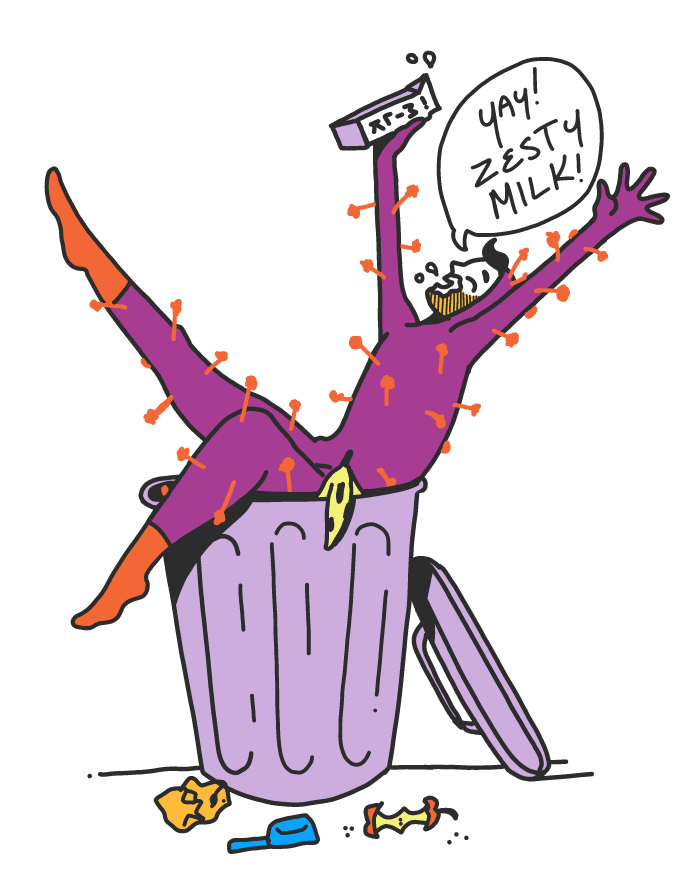
How people can be infected by touching droplets on infected surfaces was recently shown by contact tracers in New Zealand, who were able to use video cameras to examine how an infection spread through a hotel. They found that one person became infected after touching a rubbish bin lid that an infected person had used. Wisely, the hotel then changed to non-touch rubbish bins!
So, we can catch the virus from droplets in the air and from surfaces. However, you don’t need full-on protective gear to keep yourself and those around you safe. To reduce your chance of catching and spreading the virus that causes COVID-19, you can take sensible and easy measures like keeping some physical distance from other people, wearing a mask and washing your hands. We’ll discuss these preventative measures more in the next episode.
Together, the little things we do to protect ourselves and others will help to stop this pandemic. Here are extra some links if you would like to find out more:
What's the difference between aerosols and droplets?
How long can the virus survive?
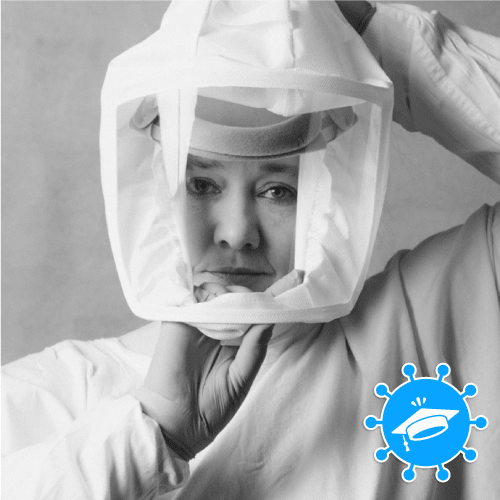
Approved by Certified COVID Expert,
Dr Julie McAuley
Julie is the lead scientist and manager of a dedicated Doherty Institute COVID-19 research laboratory. She is an expert in understanding respiratory virus infection and the disease it causes, including studying the past influenza pandemics of 1918, 1956, 1968 and 2009. Her work is now focused on understanding COVID-19 and finding effective vaccines, treatments and ways we can stop this pandemic.
Photo Credit: Phoebe Powell
 Share
Share
 Tweet
Tweet
 Pin
Pin
 Email
Email
 Share
Share
 Share
Share
